
By Brent Pennington, CCIM, Industrial Real Estate Advisory, Metroport Commercial Group, eXp Commercial
Medical Office Redevelopment Fort Worth Texas
The Situation Marketing an Obsolete Commercial Property for Alternative Use in Texas
The owner of an increasingly obsolete but functioning commercial property needed to reposition the asset to restore relevance and long-term value and reposition his company. While the property continued to operate in its existing use, that use no longer aligned with market demand, and holding the asset in its current form carried increasing obsolescence costs and risk.
The objective was not to redevelop the property internally, but to market and sell it to a buyer capable to repositioning the asset into a higher and better use. Medical office use ultimately emerged as the most viable redevelopment path. Metroport Commercial Group advised on the listing, marketing, and sale of the property.
The Challenge Pricing and Marketing an Obsolete Commercial Property for a New Use in Texas
The primary challenge was positioning and pricing an outdated commercial asset for alternative use while managing entitlement, execution, and buyer expectations.
Key constraints included:
- Functional obsolescence of a grand facility that was over one hundred years old
- Zoning and entitlement requirements specific to Fort Worth’s Near Southside Districts which prioritized urban design and mixed-use development
- Divergent pricing expectations between sellers and redevelopment-oriented buyers
- Sale price risk of market fluctuations if the property was marketed without clear redevelopment positioning
If these issues were not addressed early, the transaction risked extended market time, misaligned offers, or failed execution due to unrealistic pricing assumptions.
The Strategy Marketing and Pricing Strategy for Redevelopment-Oriented Buyers in Texas
The strategy focused on marketing the property based on its redevelopment potential rather than its existing use.
This included:
- Evaluating zoning and entitlement pathways for medical office and other compatible urban and mixed-use developments
- Aligning seller pricing expectations with redevelopment economics rather than legacy value
- Marketing the site to buyers focused on adaptive reuse and change-of-use opportunities
- Timing flexibility to widen the qualified buyer pool without overpromising
The approach emphasized expectation management, sequencing, and market realism rather than speed.
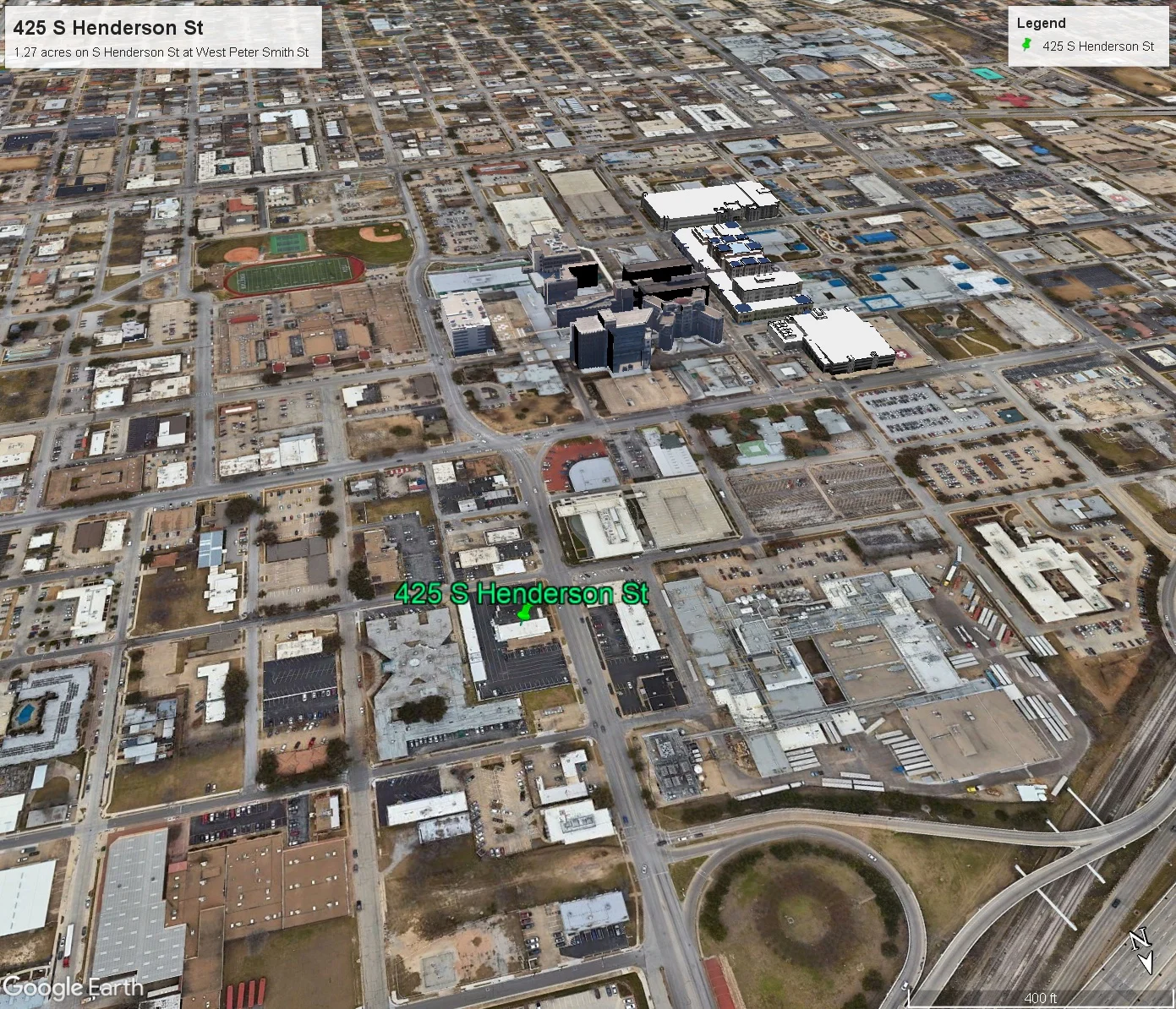
The Location Fort Worth Near Southside Medical Office and Redevelopment Context
The property was located within Fort Worth’s Near Southside District which encompasses the Fort Worth Medical District with an economic impact of more than $4.2 billion. It is an area experiencing sustained demand for healthcare-related uses and urban redevelopment.
Location considerations included:
- Proximity to hospitals and medical facilities
- Accessibility for patients and staff near IH 30 and IH 35 in downtown Fort Worth
- Market demand favoring medical and healthcare services
- An urban redevelopment environment supportive of change-of-use projects
Property Context Obsolete Commercial Building Repositioned for Medical Office Use
The existing structure provided a viable redevelopment opportunity due to its location and scale, despite functional limitations associated with its prior use. The 102-year-old former funeral home was ultimately redeveloped into a medical office building, demonstrating how older properties can be repositioned when marketed appropriately.
The Results Sale Executed for Redevelopment into Medical Office Use in Texas
- Obsolete commercial property was successfully sold for redevelopment into medical office use
- Pricing expectations between buyer and seller were aligned through market-driven positioning
- The transaction supported the seller’s goal of downsizing and repositioning operations
- The redevelopment contributed to the long-term vitality of the Near Southside District and the Fort Worth Medical District
The outcome reflected a successful transition from a declining asset to a more durable use through disciplined marketing and pricing strategy.
Why This Matters for Business Owners and Property Owners
For Business Owners and Medical Users
- Obsolete facilities do not mean unusable or worthless property
- Alternative uses often unlock value when existing uses no longer align with demand
- Early planning reduces execution and operational risk
For Property Owners and Investors
- Obsolete assets require repositioning, not just exposure
- Pricing must reflect redevelopment economics, not historical use
- Effective marketing bridges the gap between seller expectations and buyer realities
The Takeaway Redevelopment and Alternative-Use Marketing Insight
Value is created when obsolete commercial properties are marketed and priced around future demand rather than past use.
About the Advisor Industrial and Commercial Real Estate Advisory
Brent Pennington, CCIM advises industrial tenants, business owners, and property owners across North Texas on real estate decisions where risk, timing, and long-term outcomes materially impact value.
For confidential discussions, contact Brent Pennington at 817-999-8266 or brent@metroportcommercial.com
Frequently Asked Questions about Marketing Obsolete Commercial Properties for Redevelopment in Texas
What was the primary constraint in this redevelopment transaction in Texas?
The primary constraint was aligning buyer and seller timing and pricing expectations while positioning the property for a viable alternative use.
Why was this Fort Worth location suitable for medical office redevelopment?
The Near Southside Medical District supports healthcare demand, patient access, and long-term medical office tenancy.
What risk did this marketing and pricing strategy avoid?
It avoided extended market time and failed execution caused by misaligned pricing or unclear redevelopment positioning. With an obsolete facility time may cost money as repairs become critical.
How common is this issue with obsolete commercial properties?
It is common for older commercial properties to remain priced for legacy use despite shifting market demand all the while eating up operating cash.
What should property owners verify before marketing property for alternative use?
They should verify zoning, entitlement pathways, redevelopment feasibility, and how pricing aligns with buyer development economics.
When should someone seek advisory-level representation for redevelopment-oriented sales?
Any time a property’s highest and best use is changing, advisory-level representation helps manage pricing, entitlement, and execution risk that is not visible through standard listings.